Introduction: Why Permafrost Matters for Homeowners in Interior Alaska
Building a home in Fairbanks or North Pole presents unique challenges that homeowners in the lower 48 states rarely encounter. The primary culprit? Permafrost—permanently frozen ground that underlies much of Interior Alaska. Understanding how this geological feature impacts your home is crucial for anyone considering a property investment in this region.
Permafrost isn't just an interesting geological phenomenon; it's a fundamental factor that determines whether your home will remain structurally sound for decades or face costly damage within years. The ground beneath your feet in Fairbanks can remain frozen year-round, with temperatures dropping well below freezing even during summer months just a few feet below the surface.
For homeowners, this means that traditional construction methods used in warmer climates simply won't work. The stakes are high, and the consequences of ignoring permafrost considerations can be devastating to both your property and your investment.
How Permafrost Affects Foundation Design and Home Construction
Understanding the Permafrost Challenge
Permafrost creates a paradoxical problem for builders: the ground is too unstable to build on directly, yet it's also too frozen to excavate easily. When permafrost thaws—even partially—it loses its bearing capacity and can shift, settle, or collapse. This process, called thermokarst subsidence, can cause foundations to crack, walls to shift, and entire structures to become uninhabitable.
The active layer, the top portion of soil that freezes and thaws seasonally, can be anywhere from a few feet to over 100 feet deep depending on location and conditions. Below this lies the permafrost proper, which remains frozen year-round.
Foundation Solutions for Permafrost Regions
Builders in Fairbanks and North Pole have developed several proven strategies to address permafrost challenges:
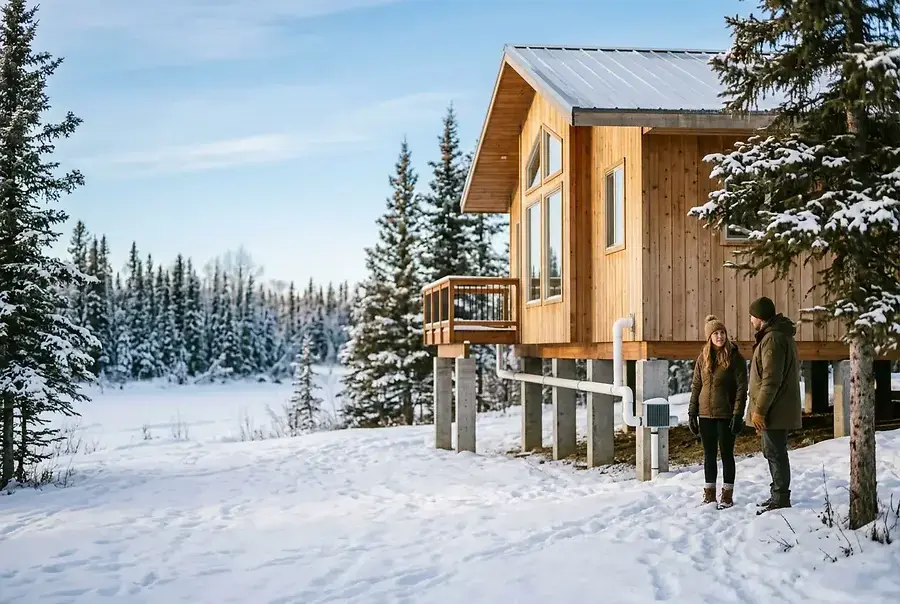
- Pilings and Posts: The most common solution involves driving deep pilings or posts through the active layer into the stable permafrost below. These structures are designed to remain frozen and provide a stable base for the home.
- Thermosyphons: These passive cooling devices circulate refrigerant through pipes to keep the ground beneath the home frozen. They're particularly useful in areas where ground temperatures are marginal.
- Insulation Strategies: Proper insulation of the foundation and crawl space helps maintain the frozen state of the permafrost while protecting the home from heat loss.
- Ventilated Crawl Spaces: Many homes are built with elevated crawl spaces that allow cold air to circulate beneath the structure, keeping the ground frozen.
Construction Materials and Methods
Building materials must be selected carefully for permafrost regions. Concrete can become brittle in extreme cold, and standard construction practices may not account for the unique stresses that permafrost creates. Builders typically use materials that can withstand extreme temperature fluctuations and the potential for ground movement.
The construction timeline is also affected by permafrost. Work must often be scheduled during warmer months when the active layer is thawed enough to allow excavation and foundation work. Winter construction is possible but significantly more challenging and expensive.
Maintenance and Long-Term Property Care in Permafrost Zones
Regular Inspections and Monitoring
Homeowners in permafrost regions must be vigilant about property maintenance. Regular inspections of the foundation, pilings, and structural integrity are essential. Look for signs of settling, such as cracks in walls, doors or windows that no longer close properly, or visible gaps between the foundation and the structure.
Many homeowners hire professional inspectors who specialize in permafrost properties to conduct annual or biennial assessments. These experts can identify potential problems before they become catastrophic.
Protecting Your Thermosyphon System
If your home uses thermosyphons, keeping them in good working order is critical. These systems require regular maintenance to ensure they're functioning properly. A failed thermosyphon can lead to permafrost thaw and foundation problems within a single season.
Managing Heat Loss from Your Home
Ironically, one of the biggest threats to permafrost stability is the heat from your own home. Warm air escaping into crawl spaces or poorly insulated foundations can gradually warm the permafrost, causing it to thaw. This is why:
- Proper insulation is not just about energy efficiency—it's about structural integrity
- Ventilation systems must be carefully designed to prevent warm air from reaching the ground
- Heating pipes and systems should be insulated to minimize heat transfer to the surrounding soil
- Regular energy audits can help identify areas where heat is escaping unnecessarily
Long-Term Property Care Considerations
Owning a home in a permafrost zone requires a different mindset than homeownership in other regions. Budget for specialized maintenance that you wouldn't encounter elsewhere. This includes thermosyphon servicing, permafrost monitoring, and potentially expensive repairs if foundation issues develop.
Additionally, keep detailed records of any structural changes, repairs, or inspections. This documentation becomes valuable if you ever decide to sell the property, as it demonstrates that you've maintained the home responsibly.
Conclusion: Making Informed Decisions About Your Arctic Home Investment
Investing in residential property in Fairbanks or North Pole is absolutely possible, but it requires understanding and respecting the unique challenges posed by permafrost. The good news is that modern construction techniques have proven effective at creating stable, comfortable homes in these regions.
Before purchasing property, consider these key points:
- Have a professional permafrost assessment conducted on any property you're considering
- Understand the specific foundation design and maintenance requirements of the home
- Budget for ongoing specialized maintenance and monitoring
- Work with builders and contractors experienced in permafrost construction
- Factor in the long-term costs of permafrost-related maintenance when evaluating property values
With proper planning, maintenance, and professional guidance, your Arctic home can be a sound investment that provides decades of comfortable living. The key is approaching homeownership in Interior Alaska with eyes wide open to both the challenges and the solutions that make it possible to build successfully in this remarkable region.