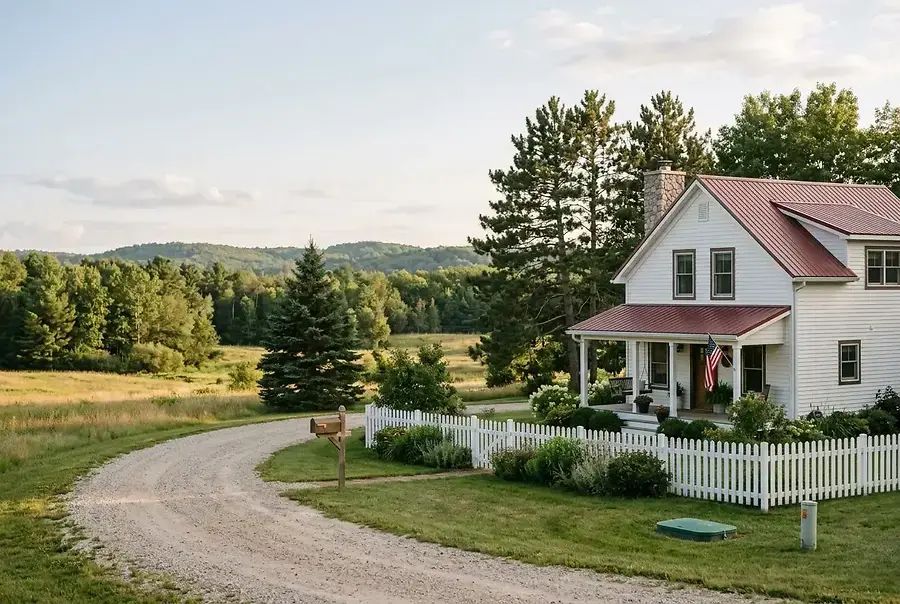
Why Property Costs Matter When Buying in Rural Michigan
Purchasing property in rural Michigan can seem like an attractive investment. Lower purchase prices, spacious land, and a slower pace of life draw many buyers to small towns across the state. However, many prospective homeowners focus solely on the initial purchase price and overlook the ongoing costs that come with rural property ownership.
Understanding the full financial picture is essential before making such a significant investment. Property taxes, insurance premiums, utility costs, and maintenance expenses can vary dramatically from one community to another. By examining these factors across 19 Northern Michigan towns, potential buyers can make more informed decisions about where to invest their money.
The stakes are high—choosing the right location can save you thousands of dollars over the years, while an uninformed decision could lead to unexpected financial burdens.
Breaking Down Property Tax Rates Across Northern Michigan's Small Towns
Understanding Michigan's Property Tax System
Michigan's property tax system is based on the taxable value of your property, which is typically 50% of the market value. This differs from many other states and is an important distinction for potential buyers to understand. The effective tax rate varies significantly depending on your location within the state.
Tax Rate Variations Across 19 Northern Michigan Communities
When examining 19 small towns in Northern Michigan, property tax rates range considerably:
- Some communities maintain effective tax rates between 1.2% and 1.5% of property value
- Mid-range towns typically fall between 1.5% and 1.8%
- Higher-tax communities can reach 1.8% to 2.2% or more
This variation means that a $200,000 home could cost anywhere from $2,400 to $4,400 annually in property taxes, depending on the specific town. Over a 30-year mortgage, this difference compounds significantly.
Factors Influencing Local Tax Rates
Several factors determine why tax rates differ between communities:
- School funding needs: Towns with larger school districts often have higher millage rates
- Municipal services: Communities offering more extensive services typically charge higher taxes
- Infrastructure maintenance: Towns with aging infrastructure may require higher tax revenues
- Population density: Smaller, more isolated communities sometimes have higher per-capita costs
Hidden Costs Beyond Taxes: Insurance, Utilities, and Maintenance Expenses
Homeowners Insurance in Rural Areas
Rural properties often face unique insurance challenges. Distance from fire departments, limited emergency services, and exposure to natural elements can increase premiums. In Northern Michigan towns, homeowners insurance typically ranges from $800 to $1,500 annually, compared to state averages of $600 to $1,000.
Pro tip: Inquire about bundling discounts and ask insurers about specific risk factors in your chosen community.
Utility Costs and Infrastructure
Rural properties often have higher utility expenses than their suburban counterparts:
- Heating costs: Northern Michigan winters are harsh; expect higher heating bills, especially for properties relying on propane or oil
- Water and septic: Properties on well and septic systems require regular maintenance and occasional repairs
- Electricity: Rural areas may have higher per-unit electricity costs due to infrastructure expenses
- Internet and telecommunications: Limited competition in rural areas can mean higher broadband costs
Budget an additional $100 to $300 monthly for utilities in rural Northern Michigan compared to urban areas.
Maintenance and Repair Expenses
Rural properties demand more attention and investment:
Septic system maintenance: Pumping every 3-5 years costs $300-$500. Unexpected repairs can exceed $5,000.
- Well maintenance: Annual inspections and potential repairs add $200-$500 yearly
- Driveway upkeep: Gravel or unpaved driveways require regular maintenance; paving costs are substantial
- Roof and exterior: Harsh winters accelerate wear on roofing and siding
- Heating system servicing: Annual maintenance for furnaces and boilers is essential in cold climates
Set aside 1-2% of your property value annually for maintenance—potentially $2,000-$4,000 for a $200,000 home.
Comparing Total Annual Costs
When combining all expenses, a $200,000 rural property in Northern Michigan might cost:
- Property taxes: $2,400-$4,400
- Insurance: $800-$1,500
- Utilities: $1,200-$3,600
- Maintenance: $2,000-$4,000
- Total annual cost: $6,400-$13,500
This represents 3.2% to 6.75% of the property value annually—a significant ongoing investment.
Making an Informed Decision About Your Rural Michigan Home Investment
Research Your Specific Community
Don't rely on general statistics. Contact local assessor offices, speak with current residents, and review recent property sales in your target community. Each of the 19 Northern Michigan towns has unique characteristics that affect costs.
Calculate Your True Cost of Ownership
Before making an offer, create a detailed budget including all identified costs. Use this calculation to determine if the property truly fits your financial situation. A lower purchase price doesn't always mean a better deal if ongoing costs are substantially higher.
Plan for the Unexpected
Rural properties often surprise owners with unexpected expenses. Maintain an emergency fund of at least $5,000-$10,000 for urgent repairs. Well pumps fail, septic systems back up, and roofs leak—often at the worst possible times.
Consider Long-Term Value
While rural Michigan properties may appreciate slowly, they offer lifestyle benefits and stability. Evaluate whether the investment aligns with your long-term goals, not just short-term financial returns.
Understanding property costs across Northern Michigan's small towns empowers you to make confident decisions. By examining taxes, insurance, utilities, and maintenance expenses, you can identify communities that offer the best value for your circumstances. Rural Michigan living can be rewarding—when you're financially prepared for it.