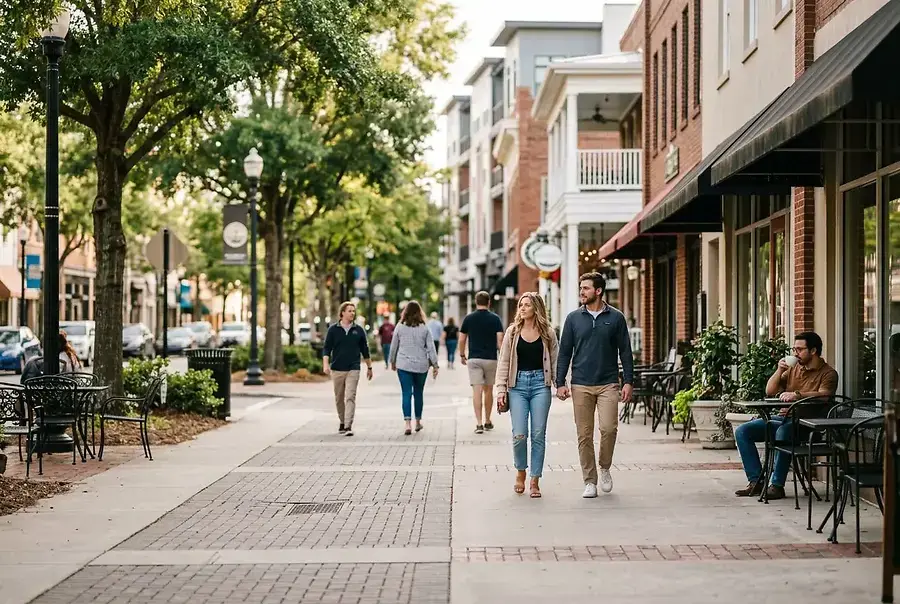
How Walkability Impacts Home Values and Buyer Preferences
Walkability has become one of the most influential factors in determining property values across North Carolina's most desirable communities. Homebuyers increasingly prioritize neighborhoods where they can access daily necessities—groceries, restaurants, shops, and services—without relying on a car. This shift in preferences has fundamentally reshaped the real estate landscape in the Triangle and coastal regions.
The Premium for Pedestrian-Friendly Communities
Properties in highly walkable neighborhoods command significantly higher prices than comparable homes in car-dependent areas. In downtown Raleigh, Durham's American Tobacco Campus, and Chapel Hill's downtown district, homes within walking distance of shops, restaurants, and cultural venues consistently appreciate faster than suburban alternatives. Buyers are willing to pay a premium for the convenience and lifestyle benefits that walkability provides.
Research shows that homes in walkable neighborhoods experience stronger demand, faster sales, and better long-term appreciation. This trend reflects a broader demographic shift, particularly among younger professionals and empty-nesters who value urban convenience over sprawling suburban lots.
Demographic Shifts Driving Walkability Demand
Millennials and Gen Z homebuyers prioritize walkable communities where they can enjoy vibrant social scenes and reduce transportation costs. Additionally, aging populations increasingly seek neighborhoods that allow them to maintain independence without driving everywhere. These demographic trends have made walkability a critical investment consideration for property values.
Comparing Lifestyle Amenities: Triangle Urban Centers vs. Coastal Neighborhoods
While the Triangle and coastal communities both offer excellent quality of life, they provide distinctly different lifestyle experiences that appeal to different buyer profiles.
Triangle Urban Centers: Employment and Culture
Raleigh, Durham, and Chapel Hill form a dynamic economic hub with world-class research institutions, technology companies, and healthcare facilities. These urban centers offer:
- Employment Opportunities: The Research Triangle Park attracts major corporations and startups, providing diverse career paths and competitive salaries.
- Cultural Amenities: Museums, theaters, galleries, and music venues create vibrant entertainment scenes in each city.
- Educational Excellence: Duke University, UNC Chapel Hill, and NC State provide top-tier schools and research opportunities.
- Dining and Retail: Diverse restaurant scenes and shopping districts cater to varied tastes and preferences.
The Triangle's walkable downtown districts—particularly Durham's Brightleaf Square and Chapel Hill's Franklin Street—offer urban living with strong community engagement and continuous development.
Coastal Communities: Lifestyle and Recreation
Coastal towns like Wilmington, Carolina Beach, and Outer Banks communities prioritize outdoor recreation and relaxed living. Key lifestyle features include:
- Beach Access: Immediate proximity to water activities, from surfing to boating and fishing.
- Outdoor Recreation: Hiking, kayaking, and nature exploration are central to daily life.
- Community Atmosphere: Smaller, tight-knit communities foster strong neighborhood connections.
- Seasonal Tourism: Vibrant summer seasons bring economic activity and entertainment options.
While coastal towns may have fewer employment opportunities than the Triangle, they offer unmatched quality of life for those prioritizing outdoor recreation and relaxation.
Transportation Infrastructure and Commute Considerations for Different Communities
Triangle Transportation Networks
The Triangle's growing public transportation infrastructure makes car-free living increasingly feasible. GoRaleigh, GoDurham, and Chapel Hill Transit provide bus networks connecting major employment centers, universities, and residential areas. Additionally, the region's relatively compact geography allows reasonable commutes between cities for those working in multiple locations.
However, the Triangle's rapid growth has created traffic congestion on major corridors. I-40, I-85, and I-440 experience peak-hour delays, making commute times unpredictable. Choosing a home close to your workplace or along efficient transit routes becomes crucial for quality of life.
Coastal Community Transportation
Coastal towns typically require personal vehicles for most activities, as public transportation is limited. However, the slower pace of life and shorter distances between amenities often offset this limitation. Many coastal residents appreciate the trade-off: less public transit but fewer traffic jams and a more relaxed driving experience.
For those working remotely, coastal locations offer exceptional value—you gain beach lifestyle without the commute burden that would otherwise make coastal living impractical.
Commute Impact on Property Values
Properties with shorter commutes to major employment centers command premium prices. In the Triangle, homes near Research Triangle Park, downtown Raleigh, or Duke University appreciate faster than distant suburban properties. Proximity to employment reduces transportation costs and increases quality of life, making these locations attractive long-term investments.
Making Your Location Decision: Balancing Convenience with Long-Term Investment Potential
Evaluating Your Priorities
Choosing between Triangle urban centers and coastal communities requires honest assessment of your lifestyle priorities and career goals. Ask yourself:
- Do you prioritize career advancement and professional networking?
- Is outdoor recreation and beach lifestyle essential to your happiness?
- How important is walkability and urban convenience?
- Are you planning to work remotely long-term?
- What timeline do you have for this investment?
Investment Potential Across Communities
Triangle Properties offer stronger long-term appreciation due to consistent job growth, population influx, and economic development. The region's status as a major tech and research hub ensures sustained demand for housing. Properties in walkable neighborhoods near employment centers represent the most stable investments.
Coastal Properties appreciate more slowly but offer lifestyle benefits that justify the investment for many buyers. Waterfront and near-waterfront properties maintain value well, though they require careful consideration of climate risks and seasonal market fluctuations.
The Walkability Premium
Regardless of whether you choose the Triangle or coast, prioritize walkable neighborhoods. Properties within walking distance of amenities, schools, and services consistently outperform car-dependent locations. This premium reflects genuine quality-of-life improvements and stronger long-term demand.
Final Considerations
The best location balances your lifestyle preferences with sound investment principles. Triangle urban centers excel for career-focused professionals seeking strong appreciation potential and cultural amenities. Coastal communities suit those prioritizing outdoor recreation and lifestyle quality over maximum investment returns. In either case, walkability should be a primary consideration—it directly impacts both your daily happiness and your property's long-term value.
Take time to explore neighborhoods, walk the streets, visit local businesses, and imagine yourself living there. The perfect location combines practical advantages with genuine lifestyle appeal, ensuring your real estate investment serves both your financial goals and your quality of life.