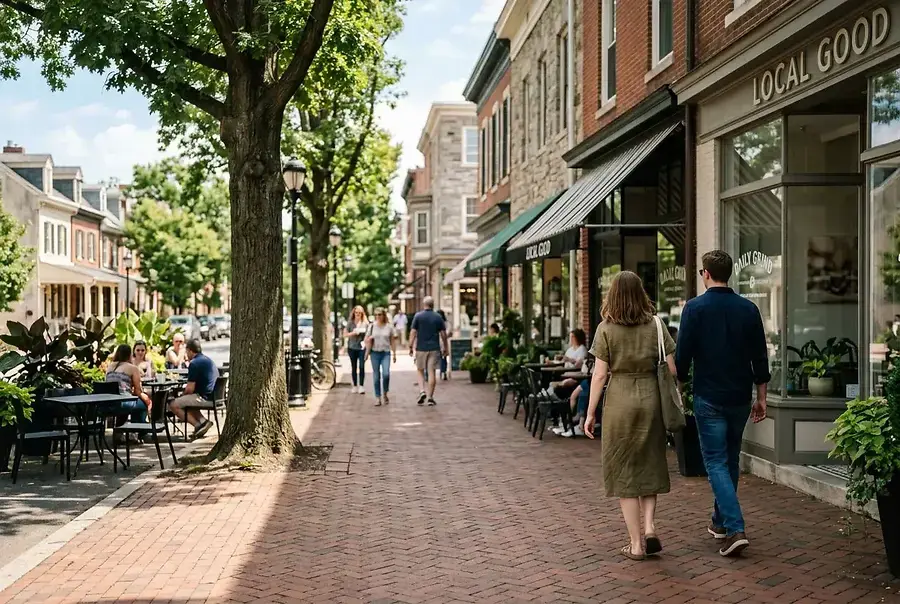
The Suburban Walkability Factor
The definition of suburban living has evolved dramatically over the past decade. Today's homebuyers aren't just seeking a quiet street and a spacious yard—they're increasingly valuing the ability to walk to coffee shops, restaurants, parks, and cultural venues. In the Philadelphia metropolitan area, this shift has created a new hierarchy of desirability across the four-county region, where walkability has become a significant driver of property values and community appeal.
Walkability represents more than just convenience; it reflects a lifestyle choice that appeals to diverse demographics. Young professionals, empty nesters, and families alike are discovering that suburban communities with strong walkable cores offer the best of both worlds: the tranquility of residential neighborhoods combined with the vibrancy of urban amenities.
How Neighborhood Walkability Impacts Home Values and Buyer Appeal
The Economic Premium of Walkability
Research consistently demonstrates that walkable neighborhoods command higher property values. Homes in areas with high walkability scores often sell for 5-10% more than comparable properties in car-dependent areas. This premium reflects buyer preferences and the tangible benefits of reduced transportation costs, improved health outcomes, and enhanced quality of life.
The financial advantage extends beyond initial purchase price. Walkable communities typically experience stronger appreciation rates, making them attractive investment opportunities for homebuyers and real estate investors alike.
Lifestyle and Health Benefits
Beyond economics, walkability directly impacts daily life quality. Residents of walkable neighborhoods engage in more physical activity, experience lower stress levels, and report higher satisfaction with their communities. The ability to accomplish errands on foot reduces reliance on vehicles, saving time and money while contributing to environmental sustainability.
Key lifestyle advantages include:
- Increased social interaction and community engagement
- Reduced transportation costs and vehicle dependency
- Greater access to dining, shopping, and entertainment options
- Improved mental and physical health outcomes
- Enhanced sense of community and neighborhood identity
Buyer Demographics and Preferences
Millennial and Gen Z buyers have shown particularly strong preference for walkable communities, with surveys indicating that 60% prioritize walkability when selecting neighborhoods. However, this trend extends across age groups, as empty nesters downsize and seek active, engaged lifestyles without the burden of extensive home maintenance.
Families with children also recognize the value of walkable neighborhoods, where kids can safely navigate to schools, parks, and friends' homes independently, fostering both independence and community connection.
Top Walkable Communities Across the Four-County Area
Philadelphia County: Urban Integration
Philadelphia's inner-ring suburbs offer exceptional walkability with authentic neighborhood character. Communities like Ardmore, Narberth, and Haverford combine tree-lined streets with vibrant commercial districts. These areas feature excellent public transportation connections, diverse dining options, and strong cultural institutions, making them ideal for those seeking suburban living with urban access.
The proximity to Center City Philadelphia provides residents with world-class museums, theaters, and restaurants while maintaining distinct neighborhood identities and more affordable housing than the city proper.
Montgomery County: Balanced Communities
Montgomery County hosts several standout walkable communities. Ambler has undergone significant revitalization, transforming its downtown into a destination with restaurants, galleries, and shops within easy walking distance of residential areas. Lansdale similarly features a charming downtown core with growing commercial activity and improved pedestrian infrastructure.
Bryn Mawr and Gladwyne offer more upscale walkable options, combining elegant residential areas with convenient access to shopping and dining. The county's investment in trail systems and pedestrian improvements has enhanced connectivity across multiple communities.
Bucks County: Emerging Walkability
Bucks County's walkable communities tend to cluster around historic town centers. New Hope stands out as a premier walkable destination, with its eclectic mix of galleries, restaurants, and shops creating a vibrant pedestrian environment. Doylestown offers a more family-friendly alternative, with its charming downtown featuring local businesses, parks, and cultural attractions.
Yardley provides another excellent option, with waterfront access and a developing downtown district that increasingly attracts residents seeking walkable suburban living with river views and recreational opportunities.
Delaware County: Accessible Neighborhoods
Delaware County communities like Media and Swarthmore exemplify successful walkable suburban development. Media's downtown features independent retailers, restaurants, and a strong community identity, while Swarthmore combines college-town vibrancy with residential charm. Both communities benefit from excellent public transportation and strong pedestrian infrastructure.
Ridley Park and Promenade represent emerging walkable options, with ongoing development projects aimed at creating more pedestrian-friendly environments and mixed-use spaces.
Conclusion: Finding Your Perfect Balance of Convenience and Space
The Philadelphia region's four-county area offers exceptional opportunities for homebuyers seeking walkable suburban communities. Whether you prioritize vibrant downtown districts, cultural amenities, or family-friendly neighborhoods, options abound across Philadelphia, Montgomery, Bucks, and Delaware counties.
The key to finding your ideal community lies in clearly defining your priorities. Consider your daily routines, desired amenities, commute requirements, and lifestyle preferences. Visit potential neighborhoods at different times of day to experience their character authentically. Walk the streets, visit local businesses, and speak with residents to understand community culture.
Walkability isn't just about proximity to amenities—it's about creating communities where people can thrive, connect, and build meaningful lives.
As the real estate market continues evolving, walkability will remain a defining factor in property values and buyer satisfaction. By understanding how neighborhood character and accessibility influence your daily life, you can make informed decisions that align with your long-term goals and lifestyle aspirations. The perfect suburban community—one that balances convenience, character, and space—awaits in the Philadelphia region.