The Growing Importance of Walkable Communities in Residential Markets
The real estate landscape is shifting. Today's homebuyers are no longer solely focused on square footage and amenities—they're prioritizing walkability and community access. A neighborhood's ability to support pedestrian-friendly living has become a defining factor in residential property decisions, influencing everything from daily convenience to long-term investment potential.
Walkable communities offer residents the freedom to accomplish daily tasks on foot or by public transit, reducing dependence on personal vehicles. This lifestyle shift reflects broader changes in how people want to live, work, and spend their leisure time. Whether you're drawn to the bustling streets of an urban center or the charming sidewalks of a small town, walkability has become a critical component of modern residential appeal.
How Walkability Affects Home Values and Long-Term Investment Returns
The Financial Impact of Walkability
Research consistently demonstrates that walkable neighborhoods command premium property values. Homes in areas with high walkability scores often appreciate faster than those in car-dependent regions. This premium reflects both current demand and the long-term desirability of accessible communities.
- Properties in highly walkable areas typically see 5-10% higher property values compared to similar homes in less accessible neighborhoods
- Reduced transportation costs for residents translate to greater household savings and increased disposable income
- Lower vehicle dependency decreases maintenance and fuel expenses, making walkable locations economically attractive
- Walkable neighborhoods attract younger professionals and families, creating sustained demand and stable property appreciation
Investment Returns and Market Resilience
Walkable communities demonstrate greater market resilience during economic fluctuations. Properties in accessible neighborhoods maintain value better during downturns because they appeal to a broader demographic of buyers. The combination of lifestyle benefits and financial advantages makes walkable locations particularly attractive for long-term investors.
"Walkability is no longer a luxury—it's becoming a necessity for modern homebuyers seeking both quality of life and sound financial investment."
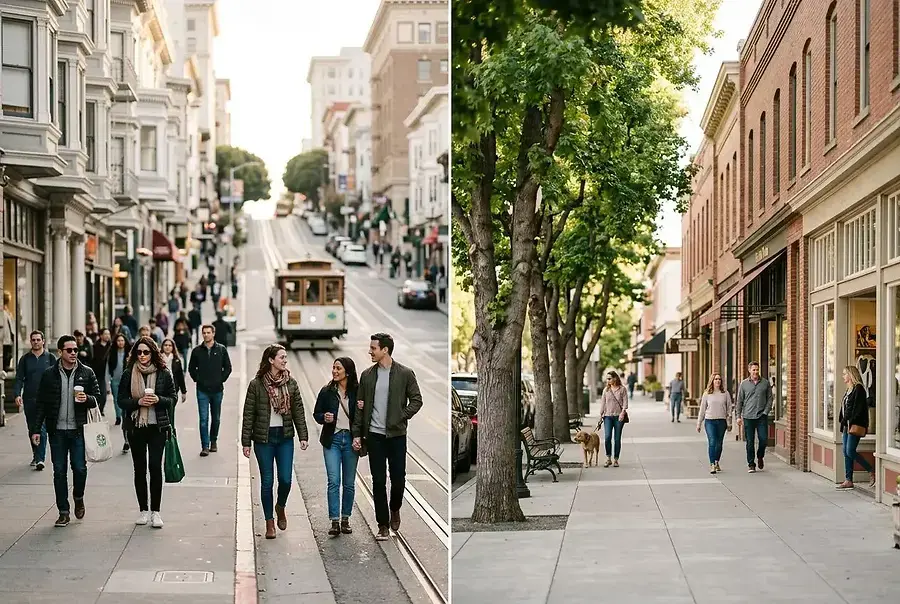
Comparing Urban Walkability in San Francisco with Small-Town Accessibility in Petaluma
San Francisco: Urban Walkability at Its Peak
San Francisco represents the gold standard for urban walkability. The city's dense neighborhoods, comprehensive public transportation system, and mixed-use development create an environment where residents can thrive without personal vehicles.
- Extensive public transit: BART, Muni, and cable cars provide comprehensive coverage across the city
- Pedestrian-friendly infrastructure: Wide sidewalks, crosswalks, and traffic-calming measures prioritize foot traffic
- Mixed-use neighborhoods: Residential areas seamlessly blend with retail, dining, and entertainment options
- Cultural accessibility: Museums, galleries, theaters, and parks are within walking distance in most neighborhoods
However, San Francisco's urban walkability comes with trade-offs. Property costs are significantly higher, and the dense urban environment may not appeal to everyone. The city's walkability attracts professionals and young adults seeking vibrant urban living, but families and those preferring quieter settings may find the pace overwhelming.
Petaluma: Small-Town Charm with Growing Accessibility
Petaluma offers a different walkability model—one that emphasizes community-scale accessibility rather than urban density. This charming North Bay town has invested in pedestrian infrastructure while maintaining its small-town character.
- Downtown revitalization: The historic downtown core features walkable shopping, dining, and entertainment districts
- Affordable accessibility: Walkable neighborhoods come at significantly lower price points than comparable San Francisco properties
- Community-focused design: Parks, libraries, and civic spaces encourage pedestrian interaction and neighborhood connection
- Emerging transit options: Growing public transportation connections improve regional accessibility
Petaluma's walkability appeals to families, remote workers, and those seeking a slower pace of life. The town offers the benefits of accessible living without the intensity or expense of major urban centers. Property values in Petaluma have appreciated steadily as more people discover the appeal of walkable small-town living.
The Lifestyle Difference
The choice between San Francisco and Petaluma ultimately reflects personal lifestyle preferences. San Francisco offers unparalleled cultural amenities, career opportunities, and urban energy. Petaluma provides community connection, affordability, and a more relaxed pace while still maintaining walkable accessibility.
Choosing Your Ideal Residential Location Based on Lifestyle Preferences
Assessing Your Walkability Needs
Before making a residential decision, consider these key questions:
- How important is car-free living to your daily routine?
- Do you prioritize cultural amenities and nightlife, or community connection and outdoor access?
- What's your budget for property investment?
- Are you seeking career opportunities in a major urban center or flexibility for remote work?
- Do you value density and diversity or prefer smaller, tight-knit communities?
Making Your Decision
Both San Francisco and Petaluma offer compelling walkability advantages, but they serve different lifestyles. San Francisco suits those seeking maximum urban convenience and career advancement, while Petaluma appeals to those wanting walkable living with affordability and community focus.
The key is aligning your residential choice with your values and lifestyle goals. Walkability matters—but what walkability means to you depends entirely on the life you want to live. Whether you choose the vibrant streets of San Francisco or the charming downtown of Petaluma, prioritizing neighborhood accessibility ensures you'll enjoy both immediate quality of life benefits and sound long-term investment returns.
As residential real estate continues to evolve, walkability will remain a defining factor in property values and lifestyle satisfaction. By understanding how location impacts your daily experience and financial future, you can make a residential choice that truly serves your needs.
