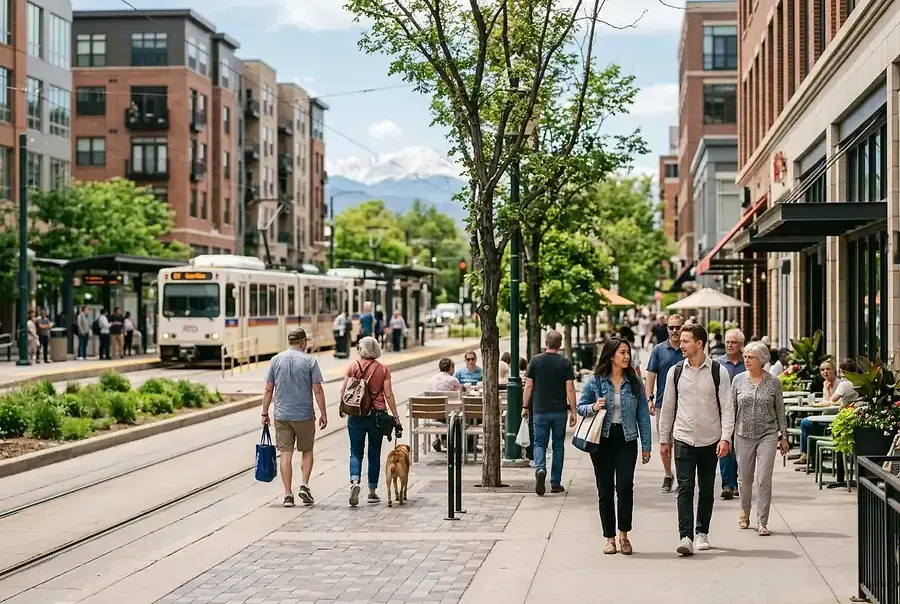
Introduction: The Growing Importance of Location Beyond Square Footage
The real estate market has undergone a significant transformation in recent years. While square footage and number of bedrooms remain important, today's homebuyers are increasingly prioritizing something different: location in relation to walkability and transit access. This shift reflects changing lifestyle preferences, environmental consciousness, and the desire for convenience that modern families demand.
In the Denver metropolitan area and surrounding Front Range communities, this trend is reshaping property values and neighborhood development patterns. Whether you're considering a home in Denver's vibrant urban core, the suburban appeal of Littleton, the growing tech hub of Castle Rock, or the mountain charm of Golden, understanding how walkability and transit access influence home values is crucial for making informed real estate decisions.
How Walkability Scores Directly Impact Property Values in Metro Denver
Understanding Walkability Scores
Walkability scores measure how easily residents can accomplish daily errands on foot. These scores evaluate proximity to amenities such as:
- Grocery stores and farmers markets
- Coffee shops and restaurants
- Parks and recreational facilities
- Schools and libraries
- Shopping districts and retail centers
A higher walkability score indicates a more pedestrian-friendly neighborhood where residents can reduce car dependency and enjoy a more active lifestyle.
The Price Premium for Walkable Neighborhoods
Research consistently demonstrates that homes in highly walkable neighborhoods command a significant price premium compared to car-dependent areas. In Denver neighborhoods like LoDo, Capitol Hill, and South Pearl Street, this premium can range from 5% to 20% or more, depending on the specific location and amenities.
Littleton's charming downtown area has experienced similar appreciation as residents seek walkable communities with local character. The ability to walk to restaurants, shops, and entertainment venues appeals to both young professionals and empty-nesters looking to downsize without sacrificing lifestyle quality.
Demographic Shifts Driving Demand
Millennials and Gen Z buyers are leading the charge toward walkable neighborhoods, but this preference spans all age groups. Empty-nesters are increasingly choosing walkable urban and suburban communities over traditional suburban homes, while young families appreciate the safety and convenience of pedestrian-friendly streets.
This demographic shift has created sustained demand for properties in walkable areas, supporting consistent property value appreciation even during market fluctuations.
Public Transit Access and Its Effect on Home Appreciation Across Front Range Communities
The Transit-Oriented Development Revolution
Public transportation access has become a primary driver of real estate value across the Front Range. The expansion of RTD light rail, bus rapid transit (BRT), and commuter rail services has fundamentally changed how people evaluate neighborhoods and make purchasing decisions.
Properties within a half-mile of transit stations typically appreciate faster than those in transit-poor areas. This proximity allows residents to commute to employment centers without the expense and stress of daily driving, making these locations increasingly attractive to cost-conscious homebuyers.
Denver's Transit Network Impact
Denver's expanding light rail system has been transformative. Neighborhoods along the T-Line, C-Line, and other corridors have experienced remarkable property value growth. Homes near transit stations offer:
- Reduced transportation costs for households
- Decreased environmental impact
- Increased property values and rental income potential
- Enhanced neighborhood vibrancy and commercial activity
- Greater accessibility for all age groups and abilities
Regional Variations: Littleton, Castle Rock, and Golden
Littleton benefits from its proximity to RTD services and its walkable downtown corridor. The combination of transit access and pedestrian-friendly streets has made it an attractive alternative to central Denver for families seeking suburban living with urban conveniences.
Castle Rock is experiencing rapid growth as a tech and employment hub. As transit infrastructure expands southward along the I-25 corridor, properties with improved transit access are becoming increasingly valuable. Forward-thinking buyers recognize that transit connectivity will be essential as the community continues to develop.
Golden presents a unique case where natural beauty combines with improving transit access. The community's walkable downtown and proximity to outdoor recreation, coupled with enhanced RTD service, make it increasingly appealing to those seeking mountain living without complete car dependency.
Long-Term Investment Potential
Properties in transit-accessible areas represent strong long-term investments. As transportation infrastructure continues to expand and urban planning increasingly prioritizes transit-oriented development, these properties are positioned to appreciate significantly. Additionally, transit-adjacent properties tend to maintain value better during economic downturns, as their utility transcends market cycles.
Conclusion: Positioning Your Home in a Transit-Oriented Future
The real estate landscape across Denver, Littleton, Castle Rock, and Golden is being fundamentally reshaped by walkability and transit access. These factors are no longer secondary considerations—they are primary drivers of property values and neighborhood desirability.
For homebuyers, this means evaluating properties not just by traditional metrics like square footage and condition, but by their position within walkable, transit-connected communities. For sellers, highlighting walkability scores and transit proximity can significantly enhance property appeal and value.
As communities continue to evolve and transportation infrastructure expands, the premium placed on walkability and transit access will likely increase. Whether you're buying, selling, or investing in real estate across the Front Range, understanding and leveraging these factors will be essential to making smart decisions in the modern real estate market.
The future of real estate is not just about the home itself—it's about the neighborhood's connectivity and walkability.
