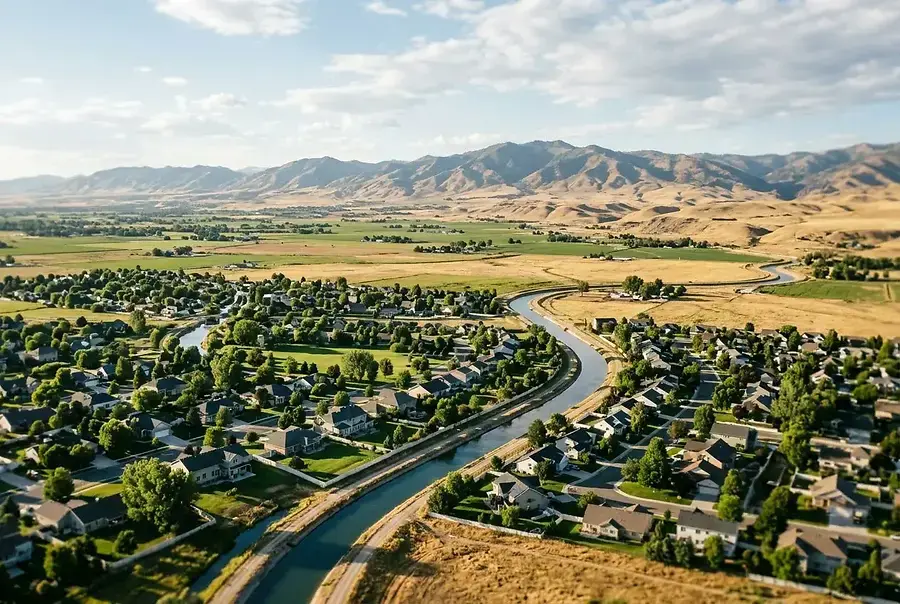
Introduction: The Hidden Factor Affecting Your Home's Worth
When searching for your dream home in the Treasure Valley, most buyers focus on square footage, location, and curb appeal. However, one of the most critical factors determining your property's value often goes overlooked: water rights and access. In Idaho's semi-arid climate, water is not just a utility—it's a commodity that directly impacts your home's market value, your ability to maintain landscaping, and your long-term investment potential.
Whether you're considering a property in Boise, Nampa, or any surrounding community, understanding how water rights work and how they influence property prices is essential to making an informed purchasing decision. This guide will help you navigate this complex but crucial aspect of Treasure Valley real estate.
Water Rights Basics: How They Influence Residential Property Values in Treasure Valley
Understanding Water Rights in Idaho
Water rights in Idaho operate under the "prior appropriation" doctrine, which means the first person to use water and put it to beneficial use has priority rights. Unlike riparian rights systems in other states, Idaho's system doesn't automatically grant water access to property owners simply because they own land near a water source.
For residential properties, water rights typically fall into several categories:
- Culinary Water Rights: Rights to use water for household consumption and domestic purposes
- Irrigation Water Rights: Rights to use water for landscaping and lawn maintenance
- Groundwater Rights: Access to water from wells on your property
- Surface Water Rights: Access to water from rivers, streams, or canals
How Water Rights Affect Property Valuation
Properties with secure, senior water rights command premium prices in the Treasure Valley market. A home with both culinary and irrigation water rights can be worth significantly more than an identical property with limited water access. This premium reflects the long-term value of being able to maintain landscaping, gardens, and outdoor living spaces without restrictions.
Conversely, properties with junior water rights or those dependent on groundwater may face restrictions during drought years, potentially affecting property desirability and resale value. Buyers should always investigate the age and security of water rights before making an offer.
Comparing Water Access Across Nampa, Meridian, Caldwell, Boise, Kuna, Eagle, McCall, and Sun Valley
Boise: Premium Water Access and Higher Values
Boise, as the state capital and largest metropolitan area, benefits from well-established water infrastructure and senior water rights through the Boise Project. Most residential properties in Boise have access to culinary water and many have irrigation rights, supporting the area's lush landscaping and higher property values. This water security is one reason why Boise commands some of the highest residential prices in the region.
Nampa: Growing Demand with Variable Water Access
Nampa's rapid growth has created increased demand for water resources. While many established neighborhoods have reliable water access, newer developments may have more limited or junior water rights. Homebuyers in Nampa should carefully verify water rights status, as this can significantly impact both current value and future appreciation potential.
Eagle and Meridian: Suburban Growth and Water Considerations
These rapidly developing communities attract families seeking newer homes and suburban living. However, water availability varies considerably. Properties with established water rights tend to appreciate faster, while those relying on groundwater or junior rights may face long-term challenges. The premium for secure water access is particularly pronounced in these growth areas.
Caldwell, Kuna, and McCall: Diverse Water Scenarios
Caldwell offers a mix of properties with varying water access levels. Kuna, a smaller community experiencing growth, has more limited water infrastructure, making water rights particularly valuable. McCall, located at higher elevation with different water dynamics, offers unique considerations for mountain property buyers. In all three communities, water rights status should be a primary evaluation criterion.
Sun Valley: Luxury Market with Premium Water Access
Sun Valley's exclusive market demands premium water access to support the region's high-end properties and recreational amenities. Water rights here are not just about functionality—they're about maintaining the lifestyle and aesthetic standards that justify luxury pricing.
Key Considerations for Treasure Valley Homebuyers
Questions to Ask Before Purchasing
When evaluating any property in the Treasure Valley, ensure you ask your real estate agent and conduct due diligence on these water-related questions:
- What type and quantity of water rights are included with the property?
- Are the water rights senior or junior, and what does that mean for reliability?
- Is the property served by a municipal water system or private well?
- Have there been any water restrictions or limitations in recent years?
- What are the costs associated with water delivery and maintenance?
- Are there any pending water rights disputes or legal issues?
The Long-Term Investment Perspective
Water scarcity in the western United States is a growing concern. Properties with secure, senior water rights are increasingly viewed as valuable long-term investments. As water becomes scarcer, the premium for reliable water access will likely increase, making water-rich properties more desirable and valuable.
Conclusion: Making Informed Decisions About Water-Dependent Properties
In the Treasure Valley, water rights are not a minor detail—they're a fundamental component of property value and long-term investment potential. Whether you're buying in Boise's established neighborhoods, Nampa's growing suburbs, or any of the surrounding communities, understanding water access and rights should be central to your decision-making process.
Take time to research water rights status, ask detailed questions, and consider consulting with a water rights specialist if you're investing in a property where water access is uncertain. By doing so, you'll make a more informed purchase and protect your investment for years to come.
Remember: In Idaho's semi-arid climate, water is wealth. Choose your property accordingly.
