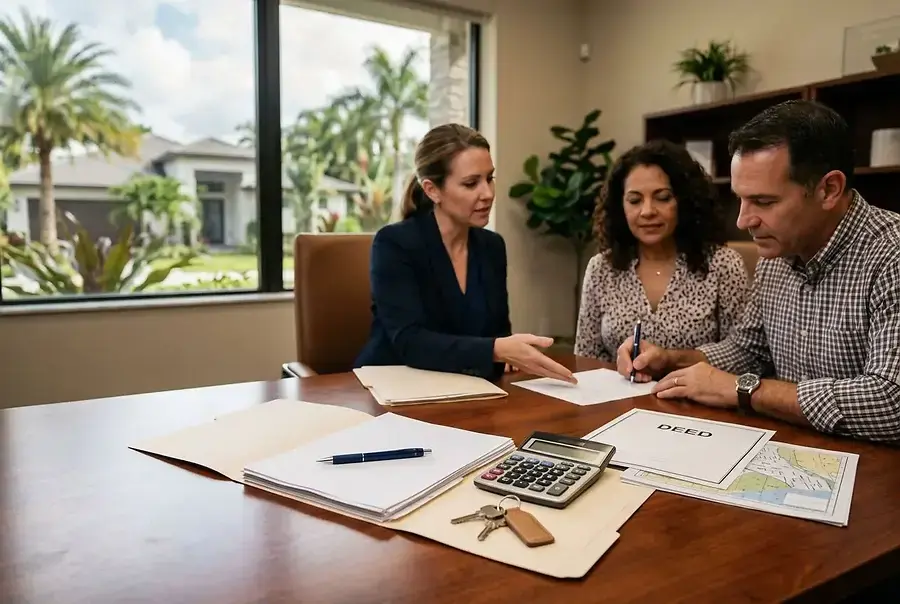
Understanding the Components of Florida Closing Costs
Closing costs represent the final expenses incurred when transferring property ownership in Florida. These fees typically range from 2% to 5% of the home's purchase price, though the exact amount varies based on the property value and specific transaction details.
Common Closing Cost Components
Several key expenses make up the majority of closing costs:
- Loan Origination Fees: Charged by lenders for processing your mortgage application, typically 0.5% to 1% of the loan amount
- Appraisal Fees: Usually between $300-$500 to determine the property's fair market value
- Title Search and Insurance: Protects against ownership disputes, costing $500-$1,000 depending on property value
- Attorney Fees: Florida requires attorneys for real estate closings, typically $500-$1,500
- Property Taxes and Insurance: Prorated amounts for the remainder of the year
- HOA Transfer Fees: If applicable, usually $50-$300
- Recording Fees: County charges for documenting the deed transfer
Understanding each component helps you anticipate expenses and identify areas where you might negotiate savings.
How Closing Costs Differ Between Buyers and Sellers
Buyer Closing Costs
Buyers in Florida typically shoulder the majority of closing costs. Your responsibilities include:
- Loan origination and processing fees
- Appraisal and inspection fees
- Title insurance and search fees
- Attorney fees for closing
- Property taxes (prorated share)
- Homeowners insurance (first year premium)
- HOA fees and transfer costs
Buyers can expect to pay approximately 2% to 5% of the purchase price in closing costs. For a $300,000 home, this translates to $6,000-$15,000.
Seller Closing Costs
While sellers pay fewer fees overall, their costs can still be substantial:
- Real Estate Commission: Typically 5-6% of the sale price, split between buyer's and seller's agents
- Title Insurance: Seller often pays for the buyer's title insurance policy
- Attorney Fees: Closing attorney fees, sometimes shared or paid entirely by seller
- Transfer Taxes: Florida has no state transfer tax, but some counties charge documentary stamp taxes
- HOA Estoppel Letters: Verification of HOA status and fees
- Property Repairs: Negotiated repairs from inspection contingencies
The largest expense for sellers is typically the real estate commission, which can easily exceed $15,000-$20,000 on a $300,000 property.
Negotiable vs. Non-Negotiable Costs
Some costs are fixed by law or regulation, while others have flexibility. Non-negotiable costs include attorney fees (required by Florida law), recording fees, and appraisal fees. Negotiable costs include real estate commissions, inspection fees, and some lender charges.
Strategies to Reduce or Negotiate Your Closing Costs
For Buyers
Shop Around for Lenders: Different lenders charge varying origination fees and points. Comparing quotes from multiple lenders can save hundreds of dollars.
Request Seller Concessions: In a buyer's market, sellers may agree to cover a portion of closing costs as an incentive to close the deal. This is particularly common when buyers are competing offers.
Negotiate Inspection and Appraisal Fees: While you cannot eliminate these, some inspectors offer package deals or discounts for multiple services.
Obtain a Loan Estimate Early: Federal law requires lenders to provide a Loan Estimate within three business days of application. Review it carefully and ask about any fees you don't understand.
Consider a No-Cost Mortgage: Some lenders offer mortgages where they cover closing costs in exchange for a slightly higher interest rate. Calculate whether this makes financial sense for your situation.
For Sellers
Negotiate Commission Rates: Real estate commissions are not fixed. Discuss rates with your agent, especially if you're selling a higher-priced property where commission percentages can be adjusted.
Limit Repair Obligations: Carefully review inspection reports and negotiate which repairs you'll complete versus offering credits to buyers.
Price Strategically: Setting the right initial price can reduce negotiation pressure and help you avoid excessive concessions.
Understand Local Transfer Taxes: Some Florida counties charge documentary stamp taxes. Understanding your county's specific requirements helps you budget accurately.
Universal Cost-Reduction Strategies
- Get everything in writing during negotiations
- Review the Closing Disclosure document thoroughly before settlement day
- Ask your attorney to explain any unfamiliar fees
- Request itemized breakdowns from all service providers
- Consider using a mortgage broker who may have access to better rates
Final Walkthrough: Preparing for Settlement Day
The Closing Disclosure Review
Three business days before closing, you'll receive a Closing Disclosure document. This is your final opportunity to verify all costs. Compare it against your initial Loan Estimate and flag any discrepancies immediately with your lender or attorney.
What to Bring to Closing
Prepare these items for your closing appointment:
- Valid government-issued identification
- Proof of homeowners insurance (for buyers)
- Cashier's check or wire transfer information for down payment and closing costs
- List of questions or concerns about the Closing Disclosure
The Closing Process
Your closing attorney will guide you through signing documents, including the promissory note, mortgage, deed, and various disclosures. Take your time reviewing each document and ask questions before signing. The entire process typically takes 1-2 hours.
After Closing
Once you've signed all documents, the attorney records the deed with the county. For buyers, this officially transfers ownership. For sellers, funds are distributed after all liens and obligations are satisfied. Keep copies of all closing documents for your records.
Final Tip: Don't hesitate to contact your attorney or lender if you have questions about any charges. Understanding your closing costs empowers you to make informed decisions and potentially save thousands of dollars in your Florida real estate transaction.