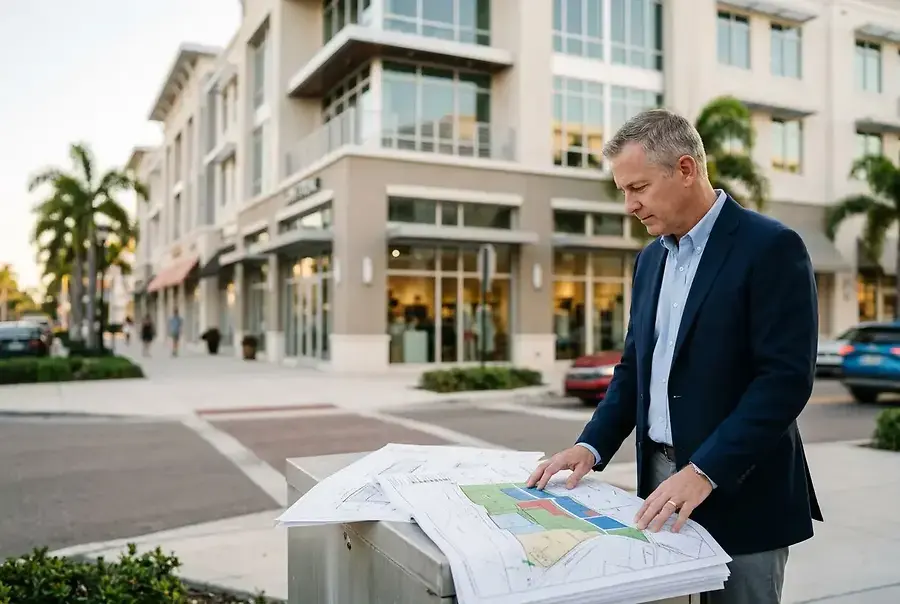
Understanding Sarasota's Commercial Zoning Districts and Classifications
Sarasota's commercial zoning landscape is carefully structured to balance economic growth with community development. The city employs a comprehensive zoning system that categorizes commercial properties into distinct districts, each with specific regulations governing land use, building heights, setbacks, and density requirements.
The primary commercial zoning classifications in Sarasota include:
- Central Business District (CBD): The heart of downtown Sarasota, designed for high-density mixed-use development with retail, office, and residential components.
- Community Commercial (CC): Moderate-density zones supporting neighborhood-serving businesses like grocery stores, pharmacies, and professional offices.
- General Commercial (GC): Broader commercial areas accommodating larger retail operations, restaurants, and service businesses.
- Office Professional (OP): Specialized zones for medical offices, law firms, and corporate headquarters with professional environments.
- Planned Development (PD): Flexible zones allowing customized development plans tailored to specific project needs.
Understanding which zoning classification applies to your property is the foundation of successful commercial real estate investment in Sarasota. Each district has unique permitted uses, conditional uses, and prohibited activities that directly influence your property's income-generating potential.
How Zoning Restrictions Impact Property Value and Development Potential
The Direct Relationship Between Zoning and Property Value
Zoning regulations fundamentally shape commercial property values in Sarasota. Properties in zones with broader permitted uses typically command higher valuations because they offer greater flexibility for future tenants and business operations. Conversely, restrictive zoning can limit your property's marketability and rental potential.
Key factors that zoning affects include:
- Permitted Uses: The types of businesses allowed on your property directly determine potential tenant pools and revenue streams.
- Building Height and Density: Restrictions on building height and floor-area ratios impact development intensity and profitability.
- Parking Requirements: Zoning-mandated parking spaces increase development costs and affect property layout efficiency.
- Setback and Frontage Rules: These regulations influence visibility, accessibility, and the property's appeal to commercial tenants.
Development Potential and Future Growth
Before investing in commercial property, carefully evaluate the zoning district's development potential. Some zones are designed for intensification, allowing for expansion and modernization, while others maintain strict limitations to preserve neighborhood character. Understanding these trajectories helps you anticipate long-term property appreciation and rental income growth.
Sarasota's growth patterns show increasing demand for mixed-use developments and adaptive reuse projects. Properties in zones that permit these uses are positioned for enhanced value appreciation as the market evolves.
Zoning Variances and Conditional Use Permits: Your Path to Property Flexibility
Navigating Variances for Non-Conforming Uses
If your intended use doesn't align with current zoning classifications, don't assume your investment opportunity is lost. Zoning variances provide a legal pathway to deviate from standard zoning requirements when strict compliance creates undue hardship or when the variance aligns with community interests.
To successfully obtain a variance, you must demonstrate:
- Unique physical characteristics of the property that create practical difficulties
- That the variance won't negatively impact neighboring properties or community character
- That the variance is the minimum necessary to address your situation
- That the variance aligns with the comprehensive plan's intent
Conditional Use Permits: Expanding Your Options
Conditional Use Permits (CUPs) offer another avenue for flexibility. These permits allow uses that aren't automatically permitted in a zone but are deemed compatible under specific conditions. Unlike variances, CUPs don't require proving hardship—they're simply uses the city recognizes as potentially appropriate with proper safeguards.
Common conditional uses in Sarasota commercial zones include:
- Restaurants and bars in office-professional zones
- Childcare facilities in commercial districts
- Medical marijuana dispensaries in designated areas
- Outdoor entertainment venues with noise restrictions
The application process for variances and CUPs typically takes 60-90 days and requires public hearings before the Planning Board and City Commission. Investing in professional guidance during this process significantly increases approval likelihood and reduces timeline uncertainty.
Partnering with Local Experts to Ensure Zoning Compliance and Success
The Value of Professional Guidance
Sarasota's zoning regulations are complex and frequently updated. Partnering with experienced professionals is not an optional luxury—it's a strategic investment that protects your capital and maximizes returns.
Essential professionals for your team include:
- Zoning Attorneys: Specialists in land use law who navigate variances, appeals, and regulatory compliance.
- Commercial Real Estate Brokers: Local experts with deep knowledge of zoning districts and market trends.
- Land Use Consultants: Professionals who assess development feasibility and identify optimization opportunities.
- Civil Engineers: Experts who ensure site plans comply with zoning setbacks, parking, and infrastructure requirements.
Due Diligence and Compliance Best Practices
Before committing capital to any commercial property, conduct thorough zoning due diligence:
- Verify Current Zoning: Obtain official zoning verification from the City of Sarasota Planning Department.
- Review Comprehensive Plans: Understand long-term city development goals that may affect your property's future value.
- Check for Non-Conforming Status: Determine if the property has non-conforming use rights that could be lost.
- Assess Overlay Districts: Identify any special overlay zones (historic districts, environmental protection areas) with additional restrictions.
- Evaluate Future Zoning Changes: Monitor proposed comprehensive plan amendments that could impact your investment.
Building Long-Term Success
Successful commercial real estate investors in Sarasota view zoning compliance not as a burden but as a competitive advantage. By thoroughly understanding regulations, proactively addressing compliance issues, and maintaining strong relationships with local planning officials, you position your investments for sustainable growth and reduced regulatory risk.
The most successful commercial property investors in Sarasota are those who view zoning regulations as opportunities for strategic advantage rather than obstacles to overcome.
Your investment success in Sarasota's commercial real estate market depends on informed decision-making grounded in zoning knowledge. Take time to understand the regulations, assemble a qualified professional team, and approach each opportunity with thorough due diligence. When you do, you'll unlock the full potential of your commercial property investments in this dynamic Florida market.